Is My Dog Overweight? The 60-Second Body Condition Check
TL;DR
- Run a 60-second ribs, waist, and tuck check at home to answer is my dog overweight without waiting on a scale.
- Ideal dogs show ribs under a thin layer, a clear hourglass from above, and a belly tuck from the side (BCS 4 to 5).
- The scale alone cannot settle is my dog overweight; breed, frame, and fat cover matter more than pounds.
- If ribs stay buried or weight rises with normal meals, book your vet before cutting food on your own.
- Safe loss runs 1 to 2 percent of body weight per week, starting with measured meals and fewer treats.
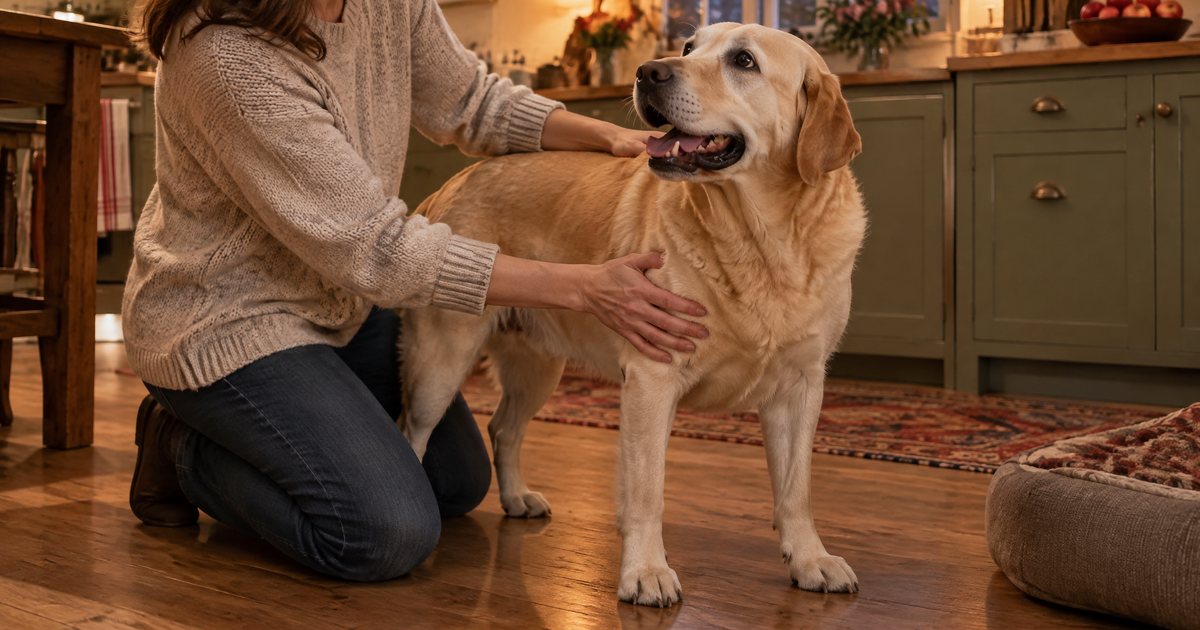
Your hand slides along your dog’s flank and finds nothing but a soft, even cushion. No ribs. You push a little harder, and there they are, buried. That small pause is where the real question starts.
Asking whether your dog is overweight usually gets one answer: ask your vet. True, and useless at nine on a Tuesday night when you’re standing in the kitchen with a hand on your dog’s side. The number on the scale won’t help either. It tells you nothing without breed, frame, and height beside it.
This article hands you a 60-second check you can run tonight: ribs, waist, tuck. You’ll learn what a healthy result feels like under your fingers, what a flag feels like, and when a home check should turn into a phone call.
The 60-Second Body Condition Check
Vets don’t guess at weight. They run their hands over the dog and score what they feel, and you can run the same test at home. People skip it because they trust the scale, and the scale can’t feel fat over a rib.
Step 1. Stand your dog on a non-slip floor in decent light and run flat fingertips along both sides of the chest. You want to find the ribs easily under a thin layer, like the back of your hand. Needing to press means fat is sitting over them.
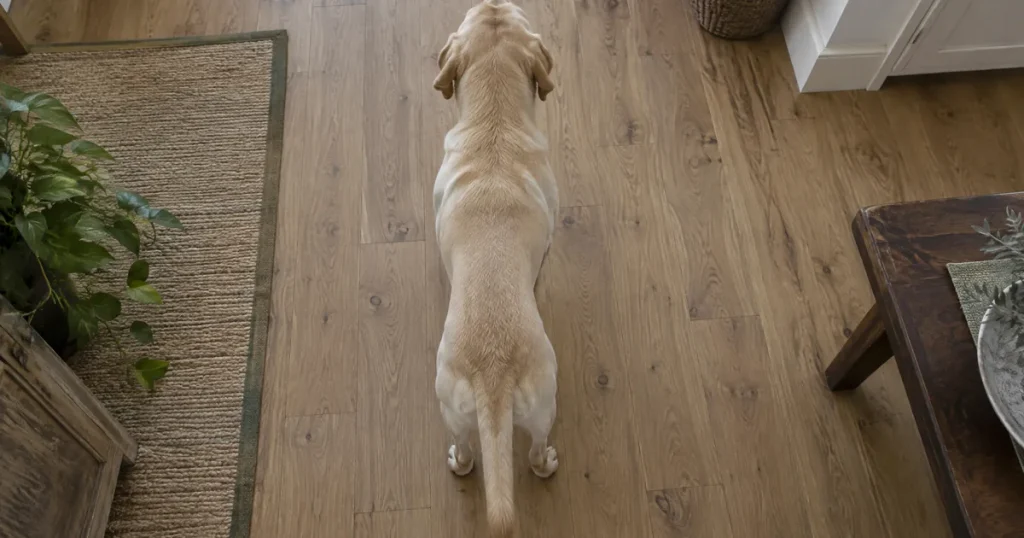
Step 2. Crouch behind your dog and look down over the spine toward the tail. A healthy dog narrows into a gentle hourglass behind the ribcage. A straight barrel shape from above is the first sign of extra weight.
Step 3. Step to the side and sight along the belly line. The belly should rise behind the ribcage in a clear tuck. A belly that runs level or sags below the chest is a flag.
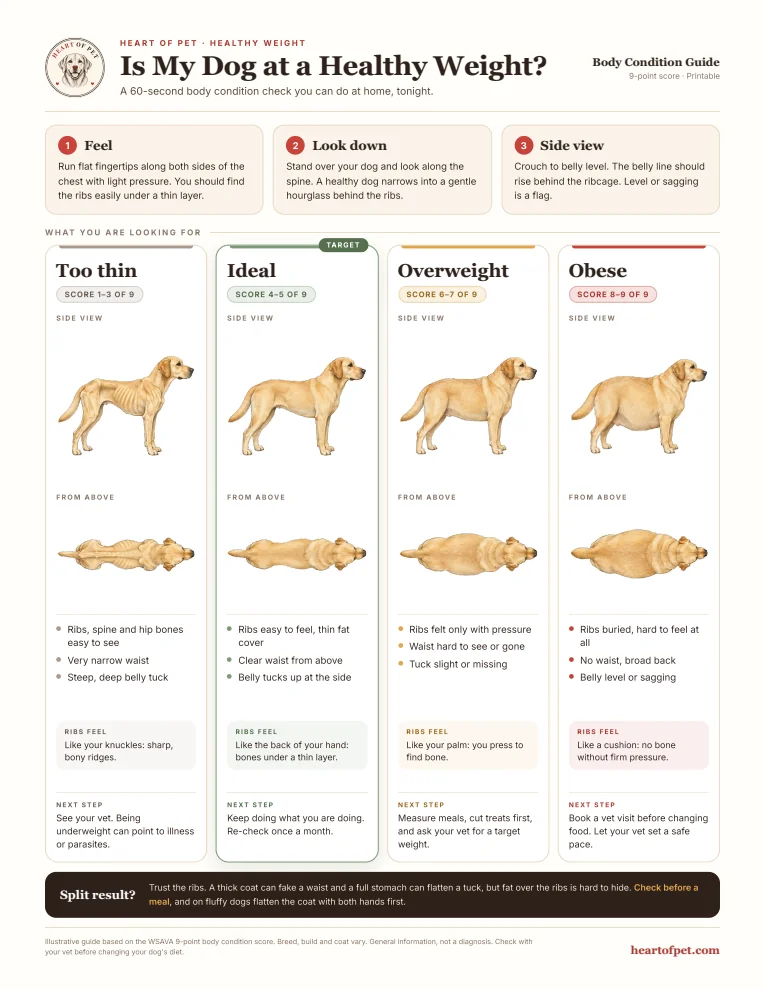
Step 4. Compare what you found against a standard body condition chart, which scores dogs from 1 to 9. The table below sums up each band.
Finish all four steps and you have a real reading, not a hunch. Write the score down with the date, because two weeks from now that note is how you’ll know if anything changed.
What Your Hands and Eyes Are Telling You
A dog can fail one part of the check and pass the other two. Read each signal on its own instead of lumping them into a single verdict. Ribs, waist, and tuck measure different things. When they disagree, the disagreement is the information.
The ribs are the signal you can trust
Calibrate your fingers on your own hand. Make a loose fist and feel your knuckles: that’s a dog that is too thin. Feel the back of your flat hand: that’s ideal. Feel your palm below the thumb: that’s a dog carrying extra fat over its ribs.
The waist is the view from above
A waist can be hidden by coat as easily as by fat. On a fluffy dog, wet the coat or flatten it with both hands along the sides before you judge the shape.
The tuck is the view from the side
Check the tuck before a meal, not after. A full stomach or a slouched stance can flatten a healthy belly line for an hour or two.
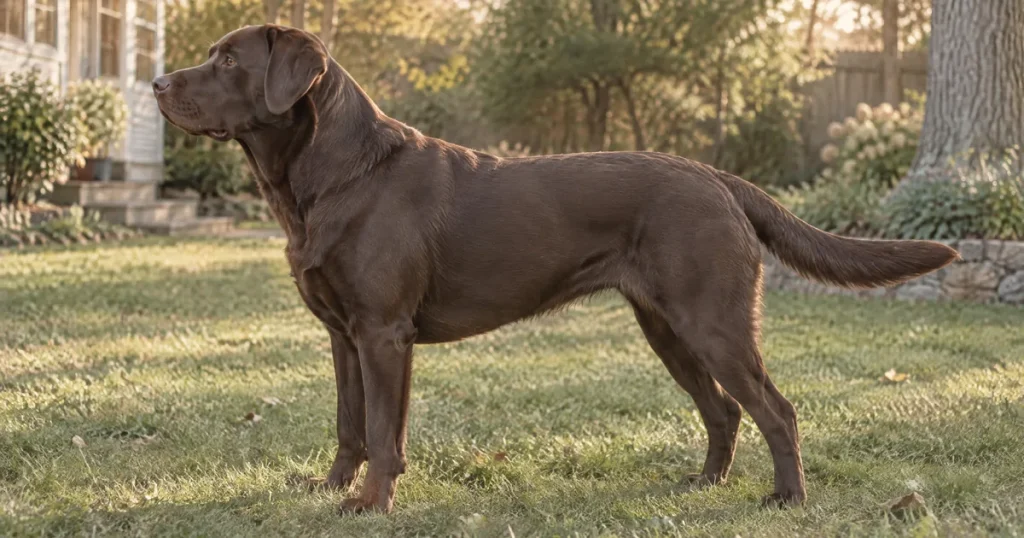
When the three signals disagree
Ribs outrank the other two when you get a split result. A thick coat can fake a waist and a full stomach can flatten a tuck. Fat over the ribs is harder to hide. If your hands find ribs easily but the waist looks wide, your dog is probably fine. If the ribs are buried, act on that even when the silhouette looks lean.
Why the Scale Alone Cannot Answer This
A number on a scale and a body condition score both claim to tell you if your dog is overweight. Only one of them is actually measuring the dog in front of you.
The scale gives you a weight in pounds. That figure is useful in exactly one situation: tracking the same dog over months, on the same scale, against a target your vet set. Taken alone, it tells you nothing. A 55-pound greyhound and a 55-pound bulldog are built so differently that the same number can mean lean for one and heavy for the other.
Body condition scoring skips the number entirely and reads fat cover directly, hands on ribs and eyes on the waist. Cornell’s veterinary guidance on canine obesity and weight loss shows how the two connect: each point above the ideal 4 or 5 is roughly 10 percent of the dog’s weight. A dog scoring 7 of 9 at 75 lb is about 20 percent overweight, which puts its target near 60 lb.
Pound targets lead most guides astray because they assume a standard dog exists. Breed, frame, and height all shift what a healthy weight looks like, and none of them appear on the scale. Body condition scoring wins for the question you’re actually asking. Use the scale only after you have a target from your vet, and only to track progress toward it.
Is My Dog Overweight or Just Well Built?
Body condition score is a hands-on rating of fat cover on a nine-point scale, judged by feel and sight rather than by the scale. It measures the layer sitting over the ribs and the shape of the waist. The goal for most pets is a BCS of 4 to 5 of 9, per the WSAVA nutritional assessment guidelines.
Asking whether a dog is overweight gets tangled fast, because build and coat lie convincingly. A greyhound at a healthy weight looks bony to anyone used to Labradors. A husky in full winter coat can hide a vanished waist entirely.
Muscular dogs fool the overhead view worst of all. A broad-chested boxer or pit mix reads as a barrel from above when the chest is simply wide. Fat sits soft and even. Muscle has a firm edge under the hand. Trust your hands over the mirror. Coat, posture, and breed silhouette all distort what the eye reports. Fingertips on the ribcage do not.
If you still can’t tell, ask your vet to score your dog at the next visit and show you exactly where to feel. That second set of hands matters most for double-coated breeds, where the coat wins every argument with the mirror.
What the Extra Weight Is Actually Costing
Extra weight isn’t a cosmetic issue. It’s a load the whole body carries, every hour of every day, and the bill arrives in places owners don’t connect to the food bowl.
It’s also common. The AAHA weight management guidelines put the share of overweight dogs and cats as high as 59 percent and warn that excess weight can shorten a pet’s life and lower its quality.
- Joints under pressure. Every extra pound presses on hips, knees, and elbows with each step. A dog carrying five spare pounds takes that load up the stairs and off the couch all day.
- Stamina drains first. Walks get shorter and play sessions end sooner. Owners often read this as aging when it’s really the weight.
- Breathing and heat. Fat insulates, so a heavier dog overheats faster on a warm day. Panting that seems excessive is often the load talking.
- Lifespan and mobility. Lean dogs tend to stay playful into old age. The gap between a lean dog and an overweight one widens quietly over years.
None of these costs announce themselves. They arrive as small, explainable changes you’d never flag individually. That’s why the 60-second check earns its place: it catches the weight before the costs add up.
The Quickest Safe Way to Help a Dog Lose Weight
Losing weight safely comes down to order, not intensity. Get the sequence right and the pounds come off without the joints, the muscle, or the dog’s enthusiasm paying for it.
Step 1. Get a vet weigh-in and a target weight. Ask for a number in pounds and a body condition score. Without a target, you’re guessing, and guessing is how dogs end up stalled or dropping too fast.
Step 2. Measure every meal with a scale or a marked cup. Free-pouring is where plans quietly fail. A kitchen scale to the gram beats a scoop to the brim.
Step 3. Cut the treats and table scraps first. These are the easiest calories to remove without shrinking the meal your dog looks forward to. Treats should make up only about 10 percent of daily calories, so swap half of them for pieces of regular kibble.
Step 4. Add structured exercise that fits the dog’s age and joints. Two short walks beat one long one for an older or heavier dog. A systematic nutritional management plan pairs the food change with movement, not instead of it.
Step 5. Weigh and recheck body condition every two weeks. Run the same hands-on check, write down what you feel, and change one variable at a time. Rapid weight loss is dangerous. The same Cornell guidance puts a safe pace at 1 to 2 percent of body weight a week, so a 50-pound dog should lose about half a pound to a pound a week.
Finish the sequence and you have a plan with a target, a pace, and a way to tell if it’s working.
When to Stop Checking and Call Your Vet
The check tells you whether to act, not why the weight arrived. A dog can be overweight on perfectly measured meals for reasons no kitchen scale will reveal.
Sudden gain tops the list of reasons to book an appointment. So does gain alongside lethargy, heavy drinking, or a swollen belly, because those combinations point at something metabolic rather than something scooped. A dog that gains weight while eating normally is a medical question, not a portion problem. Hypothyroidism and Cushing’s disease both hide behind a slow, quiet expansion that looks like overfeeding.
Ribs you cannot locate at all, even with firm pressure, also warrant a call. That depth of fat cover means the dog is carrying enough extra weight to strain joints and heart, and a vet should set the pace of loss. A nutritional assessment belongs at every routine physical, and vets treat body condition as a standard part of that exam.
Every Heart of Pet health guide is checked against veterinary sources, but a home check is a starting point, never a diagnosis. Your hands can flag a problem; only a vet can name it.
Do the Check Tonight, Then Decide
Knowing whether your dog is overweight stops being a mystery once your hands have done the work. The scale gives you a number that needs a breed, a frame and a height to mean anything. Fingertips on a ribcage give you an answer you can trust tonight.
Act on what you find and the payoff is quiet but real. Lean dogs keep their joints, their stamina and their enthusiasm for the long walk well into old age. Wait another season and the extra pounds settle in deeper, harder to shift and easier to ignore.
Do the check tonight. Write down what the ribs felt like and whether the waist showed. If the ribs stayed buried or the waist vanished, book the vet and bring your notes. A written record gives your vet something real to work with.
Bookmark this page and rerun the check every two weeks. More guides on portions, treats and exercise are on the way in the Heart of Pet Healthy Weight Journal.
FAQ
Common Questions About Dog Weight
How do you check if your dog is overweight? +
Run your hands along the ribcage, look down for a waist behind the ribs, and look from the side for a belly that tucks up. If your fingers have to press through padding to find ribs, that alone is enough to answer whether your dog is overweight.
What is the quickest way for a dog to lose weight? +
There is no safe shortcut. A healthy pace is about 1 to 2 percent of body weight a week. The fastest safe start is cutting treats and table scraps, the calories nobody measures, and swapping biscuits for pieces of the dog’s own kibble.
What is the 90/10 rule for dogs? +
About 90 percent of your dog’s daily calories should come from complete dog food and no more than 10 percent from treats and extras. Dental chews, training treats, and the crust your dog gets under the table all count toward that 10 percent.
My dog is 15 pounds overweight. Should I be worried? +
It depends on the dog’s size. Fifteen extra pounds is a modest gain for a Great Dane, but a dog whose ideal weight is 30 pounds would be carrying 50 percent too much. Either way it is worth acting on: get a vet to set a target weight and a safe pace before changing anything, because crash dieting can harm a dog.